
All I knew driving out was that Julian had found a Montana-based contractor to help us collect ponderosa cones on the Gentry ranch.
I thought I was going to document a rare event: a masting year. Every so often, in an unpredictable rhythm designed to outsmart hungry seed-eaters, living pines become flush with massive clusters of cones.
Four years after Montana's largest wildfire of 2021 carved its burn scar into the landscape, a small grove of ponderosa the fire had spared was making seed.
It was my fourth visit to the ranch, and every visit revealed a new layer of the place. When Julian and I arrived at our first collection site, I saw a woman crossing a dirt road toward us with miles of open range behind her and a big smile on her face.
It was branding day in the distance. Cattle carried across the range and the sun had just come up gold. She'd slept out there in her car to be on site early and had been brushing her teeth just before she walked over to meet us.
That was my introduction to Jess.
She told me that she'd been a wildland firefighter, the way you mention a previous job while you're working. I didn't connect the dots. At lunch she ate her homemade macaroni salad with two twigs off the ground. She went up ponderosas barehanded, and the sap built up on her skin day after day until she admitted she was looking forward to a hotel just for the shower.
That evening Velma and Rebecca, the mother and daughter who own the ranch, hosted a picnic. Neighbors around a table, homemade pickles and burgers, trading life stories. At one point someone turned the conversation to AI, which was unexpected until it turned out to mean the artificial insemination of cattle.
Jess laughed. Collecting cones in the heat of summer and eating dinner with the family whose land it was was probably the most Montana thing she'd ever done.
She's from Montana.
I asked about an interview on day one and she said yes, open book. I held off. We had three days, and I figured the conversation would be better once she understood my intentions for the project and had time to mull over what she wanted to say.
In the meantime she asked about my camera, so I handed it to her. She climbed into the back of the truck's cab and filmed the cone bushels getting loaded.
On the third day, near the end of the shoot, we sat down in the tall grass in Hidden Valley. The Gentrys named their favorite places on the ranch, and this one earned it. While much of the landscape is a stark reminder of the 2021 burn, Hidden Valley is the one place where a grove of ponderosa was spared. The pine trees were still standing, shading the valley, and producing seed.
My first question was the only one I really had to ask.
"So it's safe to say you were a hotshot?"
"Yeah."
Hotshots are specialized wildland fighting crews sent to some of the most difficult and remote fires, often working rugged terrain with limited support.
She talked about watching homes burn. She talked about friends who died doing the work.
As a dad to a seven- and an eleven-year-old, I think about conversations like this a lot. My youngest wants to know how the world works, but sometimes the real answers could give him nightmares. The world is enormous and uncertain, and that's frightening no matter how old you get.
Then you meet those who run toward the flames.
Over the time we've spent developing this short film, I've learned how much Jess has built her company around that instinct to help. Her crew includes former hotshots, firefighters, volunteers working toward wildfire careers, and loggers. Different backgrounds, brought together by the work of keeping forests and communities intact.
Wildfires are getting worse. Jess faced the worst of it. And still, she continues on with the resolve:
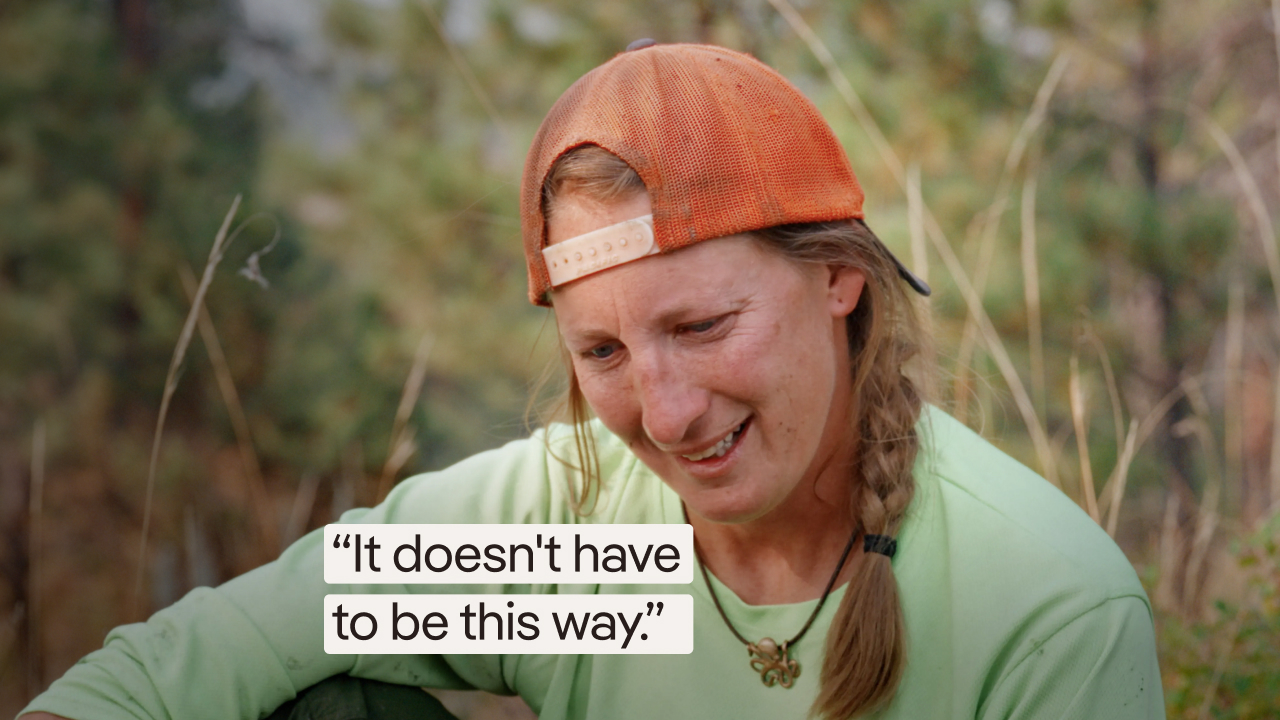
"It doesn't have to be this way. Good wildfire mitigation is just great forestry."
What I learned in those three 100-degree days, driving dirt roads past yellow wildflowers caked in butterflies, is that people like Jess keep the world hopeful. They don't pretend the frightening things aren't real. They do something about them.
On the Gentry ranch, that meant collecting seed from trees the fire had narrowly spared. For Jess, it means doing the work of keeping healthy forests and communities intact. For me, it meant helping capture a story worth telling and sharing it with you.
Meet the author: Trever is a Senior Product Designer at Mast and the filmmaker behind this story. He spends a lot of time behind a screen, but prefers being behind a camera.