

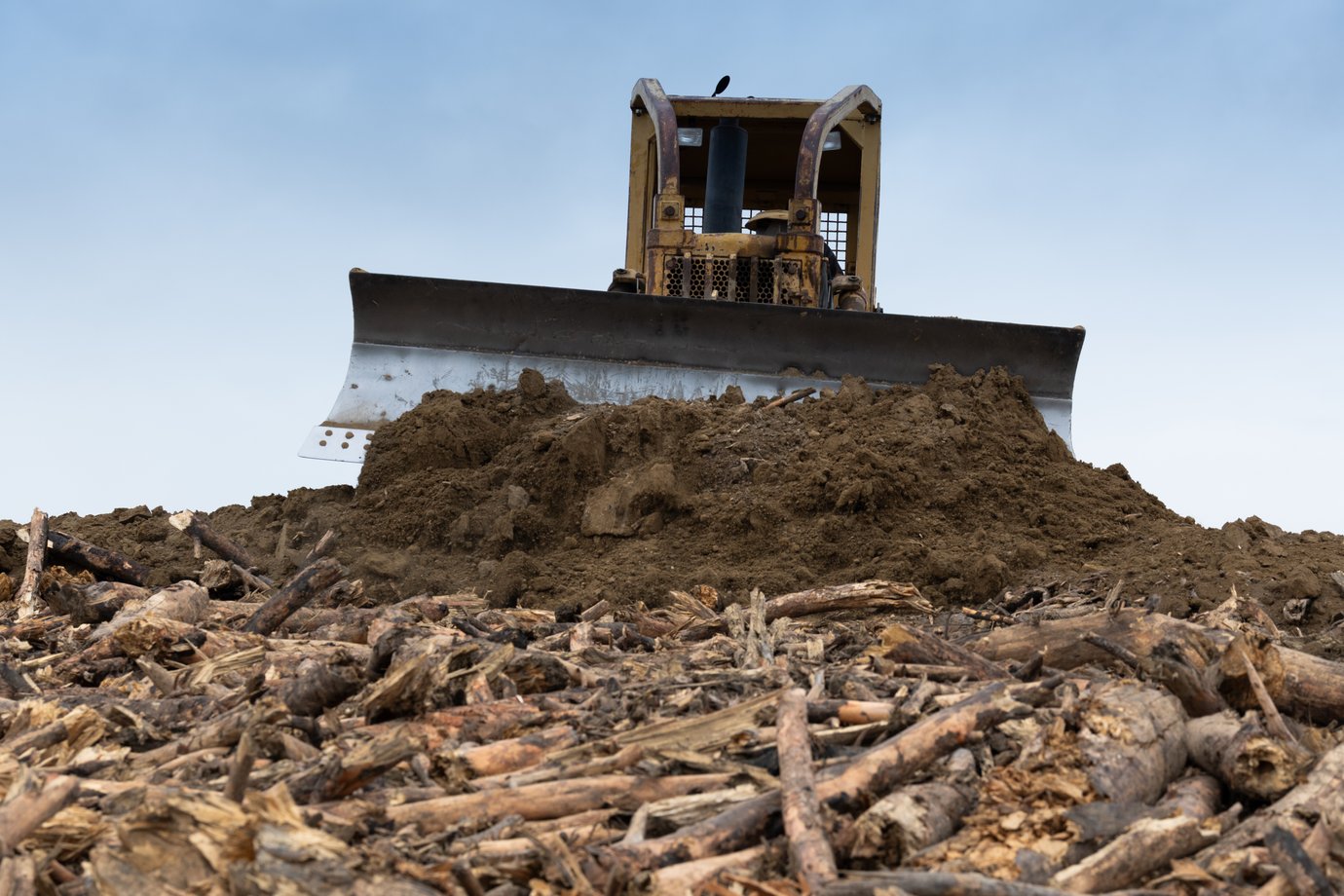
Burying wood? Couldn't you do anything else with it?
It's a fair question. The instinctive reaction, rooted in our drive to be responsible stewards of natural resources, is that wood should be used. Anything less can feel like a waste.
The reality of forest management is more complicated. Especially after severe wildfire, enormous volumes of dead trees can remain behind in places with few viable markets or management options. So, what is the best use of waste woody biomass in these situations?
This question is really three questions in one:
What is the most economical thing to do with it?
What is the most beneficial thing for the forest?
What is the most carbon-efficient thing to do with it?
This blog post examines these questions alongside the case for biomass burial when conventional uses for wood are n’t available.
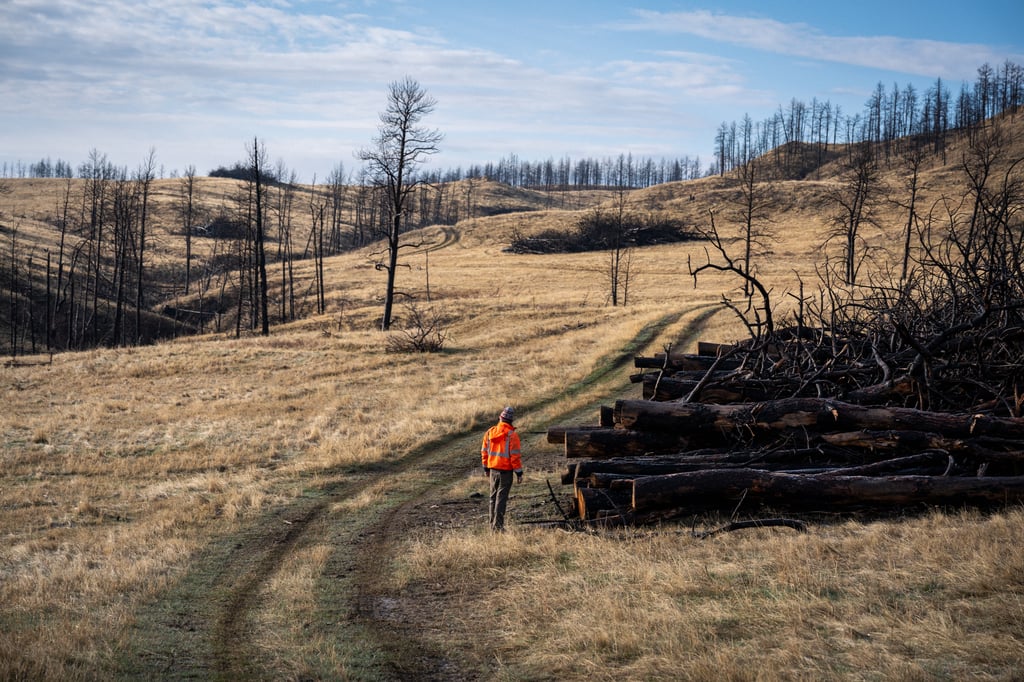
Addressing excess biomass is labor intensive and costly; compounding the scale of the resources needed for post-fire recovery. At the current pace of restoration, researchers estimate it would take roughly 50 years to reforest what has already been lost to severe fire across North America.
Before reforestation can even begin, landowners often face a more immediate question:
"What do we do with all of this wood?"
That question is based on the conventional standard of valuing wood for what it can become (firewood, pulp, building materials, etc) which depends on the surrounding economy. Where local infrastructure and economic options fall short for traditional wood uses, however, there are new opportunities emerging when accounting for the majority component within that wood: its carbon. The World Resources Institute identifies waste and residual biomass as an important potential feedstock for carbon removal when it is responsibly sourced and managed.
The carbon in the wood is the result of what the tree sequestered from the atmosphere as it grew. When the wood leftover from forest disturbance or management is destined to degrade or be burned, that creates value for carbon removal. Put another way, when the wood cannot become something else, there is a value in the use and destination of that carbon.
The best use depends on the location, available infrastructure, economics, environmental effects and, critically, what would happen to the material otherwise.
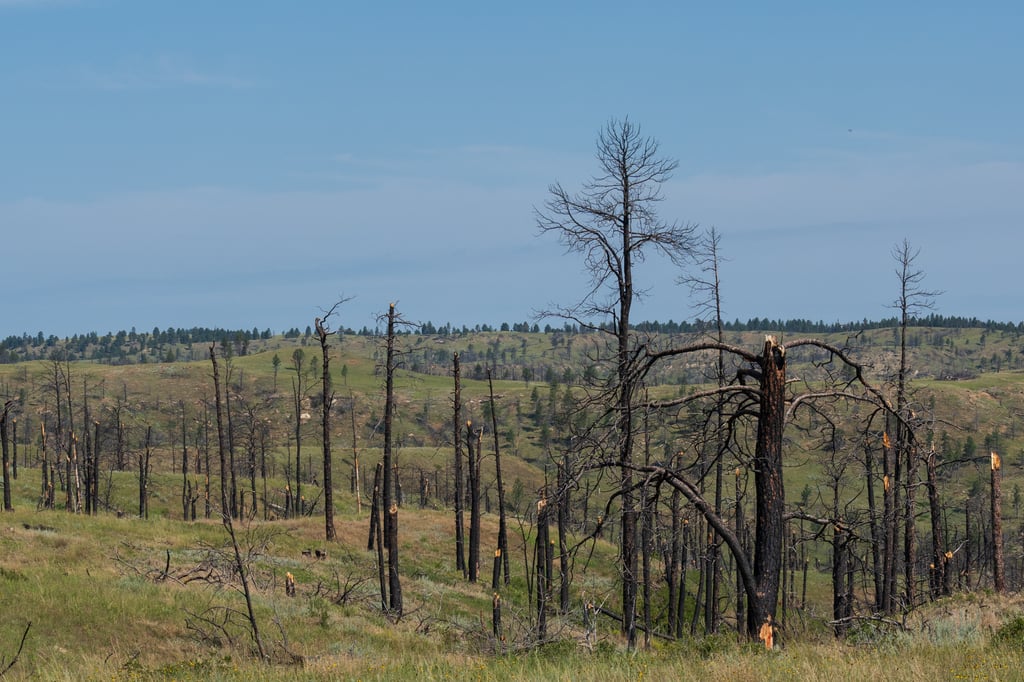
More than 10 million pounds of fire-killed trees sat on the landscape at Mast's MT1 project in eastern Montana with no place to go; destined for pile burning. We worked through other possible uses before concluding that burial of the carbon was the best use of the wood in this situation. As we evaluate new projects, we continue to qualify them with the same key questions that go beyond carbon project additionality. Yes, the project must create a new benefit for the climate that would not have occurred otherwise. Beyond that, we are developing projects where biomass burial is the best path for the forest and the communities where we work. This is not a silver bullet, but a suitable solution in many rural areas.
The Carbon Containment Lab recently released their analysis identifying where conditions across 11 Western states favor biomass burial. They state that "building pathways and markets for biomass utilization and storage is an essential step toward enabling forest management at scale in the US West and other regions of the world. But no single approach works everywhere. Each one carries its own scientific and technical requirements, and those requirements depend on the biomass itself and on the place where the work happens."
So how do we determine where biomass burial is the best fit?
The top questions for project qualification include:
1. Is there a timber market nearby that will take the wood?
If there is no mill that can take the wood, then valuation for carbon removal can enter the equation. At MT1, the nearest mill was more than 150 miles away. Hauling the biomass that distance was not economically practical and would have generated significant emissions. Montana's forest-products infrastructure has contracted substantially over time, leaving fewer markets for material in remote areas.
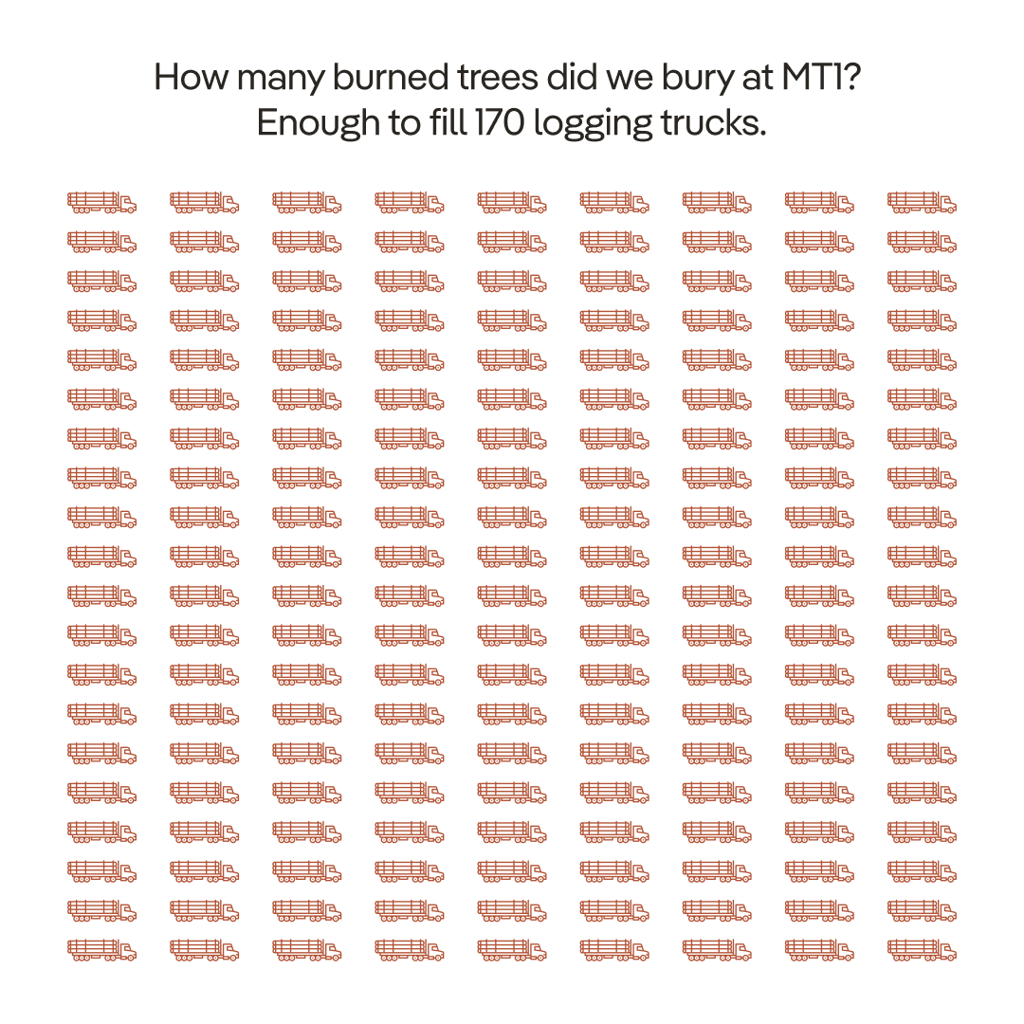
The scale made that challenge even greater. The logs ultimately buried at MT1 would have filled more than 170 logging trucks.
Distance isn't the only consideration. Mills are designed around particular species, products and feedstock specifications (such as diameters), and wildfire can suddenly create volumes of material that existing markets simply aren't equipped to absorb.
2. Can it be sold as firewood?
Firewood is most often not realistic by scale, location and condition post-wildfire.
MT1 is more than an hour from the nearest small town, with no market capable of absorbing millions of pounds of firewood. Moving that quantity elsewhere would again require substantial hauling (more emissions) and cost.
The species and sheer volume matters. A productive use for a few trees does not necessarily scale to an entire wildfire-affected landscape.
3. Is there another productive or revenue-generating use?
One of the alternatives we evaluate against is biochar.
Biochar can be an important carbon removal pathway. The question isn't whether biochar works. It is whether it is the right pathway for this biomass, in this location, at this volume.
For the projects we’re developing, it isn’t.
Near MT1, there was no stationary pyrolysis facility or processing facilities that support conversion to other products like bio-oil within any reasonable distance. Either would have required transporting more than 170 truckloads of biomass to another location.
We also evaluated mobile pyrolysis. That removes the long-distance hauling requirement, but introduces different tradeoffs around equipment, throughput, conversion and carbon efficiency.
Pyrolysis works by heating biomass in low-oxygen conditions to produce a stable carbon-rich material. In the process, only a portion of the carbon originally contained in the biomass remains in the resulting biochar. For example, one study examining spruce wood found approximately just 56% of the original carbon was retained in the biochar, although exact yields vary significantly by feedstock, system and operating conditions.
At our project sites, direct burial allows us to take a better approach to preserve the majority of the carbon already contained in the wood without additional energy required to thermally convert the biomass into another form, and without significant emissions associated with that potential conversion.
That's not an argument that biomass burial is better than biochar everywhere. It's an argument for matching the right carbon removal pathway to the specific situation.
4. What happens when the answer to all three questions is, “No”?
When fire-killed trees have no viable market, landowners are often left with two practical options: leave it in place to decompose or clear and pile-burn it.
Leaving trees in place poses risks, such as becoming fuel for the next fire. Some downed trees can be ecologically valuable, and at our reforestation sites, some logs can provide shade and protection from predation for new seedlings and contribute to the habitat as a forest recovers. But after a severe wildfire kills thousands of trees, the volume far exceeds what is needed for those ecological functions. Dead and weakened trees can also make planting and other restoration work more difficult and hazardous.
At MT1, the landowner planned to pile-burn the material to reduce the risks of additional burns on the property and make way for new trees.
Pile burning is a conventional way to manage large volumes of woody material where it needs to be removed for access, fuel management, or restoration. But it also directly returns the carbon to the atmosphere that was stored in that wood, and produces smoke and other emissions that are harmful to nearby residents.
This is where the straightforward nature of biomass burial onsite offers a way for faster recovery.
The lowest emissions pathway to biomass carbon removal
At MT1, we buried approximately 5,000 tonnes, or 10 million pounds, of wildfire-killed trees in an engineered underground chamber designed for long-term storage.
Project development emissions including transportation, log hauling, excavation, project materials and travel represented approximately 4% of the carbon stored and were accounted for in the project's lifecycle assessment. After other Registry-required deductions, Puro.earth credited the project with 4,277 tonnes of CO₂-equivalent carbon removal.
Unlike other biomass carbon removal pathways that convert the biomass into another product like biochar or bio-oil, burial did not require additional energy and processing into another material. The process was quick: the burial was completed in one summer season. The objective was achieved: remove carbon as efficiently as possible from the atmospheric cycle, store durably, and fund reforestation.
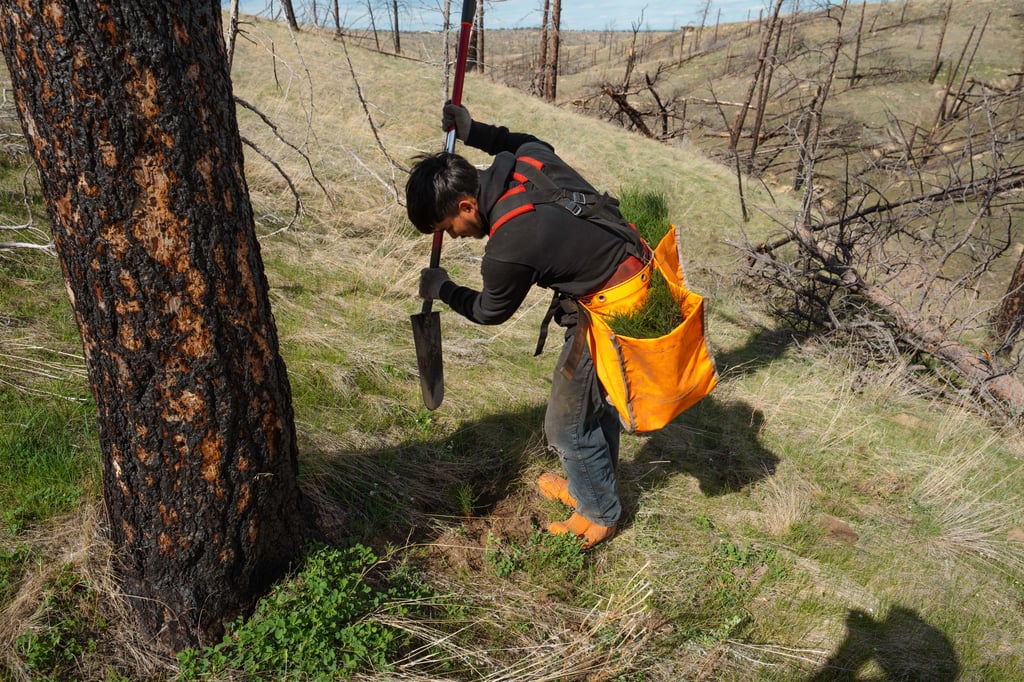
New ponderosa pine seedlings being planted at MT1, April 2026
Carbon removal that finances landowner and forest recovery
Clearing and burying unusable biomass helps solve one of the most expensive and cumbersome barriers to reforestation: the physical material left behind after the fire. Additionally, projects developed by Mast funds the other cost prohibitive aspect of post-fire recovery: new trees.
In April 2026, Mast crews planted 6,500 locally adapted ponderosa pine seedlings grown by our Silvaseed nursery in Roy, Washington. Crews strategically planted along ridgelines and other areas where the trees can eventually provide seed sources that support regeneration into the coulees below.
The carbon removal credits generated at MT1 from the biomass burial certify carbon storage for at least 100 years, with monitoring and safeguards designed to verify that durability. Buyers purchased all of the credits within six weeks of issuance. See how well the chamber is functioning with our live data here.
Create local economic value
The project’s benefits also extended beyond the project boundary into nearby towns.
MT1 directed more than $1 million into Big Horn County through local operators, contractors, lodging, food and other project spending.
For some of the people doing the work, the connection to the fire was personal. One of the heavy-equipment operators had previously fought the wildfire that burned the property in 2021. Years later, he returned as part of the crew helping to restore it.
Our lead contractor, Bob, a fourth-generation Montana logger who worked on the project, described what that meant for the local forestry community:
“In the last 20 years, things have really plummeted downhill as far as logging in Montana, where there used to be 20 to 25 major sawmills. Now there's four. So we switched into this fuel mitigation work and preventing fires.Working for Mast last summer was our first project where we took a burnt forest and got rid of all that, which was a great deal for us too, and it was a great deal for landowners. it's something that can be done with these forest fires. And it was good for our logging community around here.… It kept seven, eight of us busy all summer long. And I was able to hire some subcontractors.”
The best use depends on the wood—and the place
Was biomass burial the highest and best use of the wood at MT1?
Yes.
Is biomass burial the highest and best use of the wood elsewhere?
Yes, it will be in more places especially as wildfires in remote areas continue to increase in frequency and severity.
Where there is no viable timber or firewood market, when leaving all of the material on the landscape prohibits restoration or increases risk, biomass burial can be considered.
Burial allowed us to preserve that carbon instead, generate independently verified durable carbon removal, support local forestry jobs and help finance reforestation on the same landscape.
That won't make biomass burial the right answer everywhere—and it doesn't need to be, there’s plenty of this work to go around.
The important question is not whether one biomass pathway is universally better than another. It's whether we are matching the right solution to the biomass, the ecosystem, the landowner’s objectives, and addressing it based on what would otherwise happen to it.
At MT1, that meant taking carbon stored in a dead forest and removing it from the atmospheric cycle—while making way for the next forest to grow.
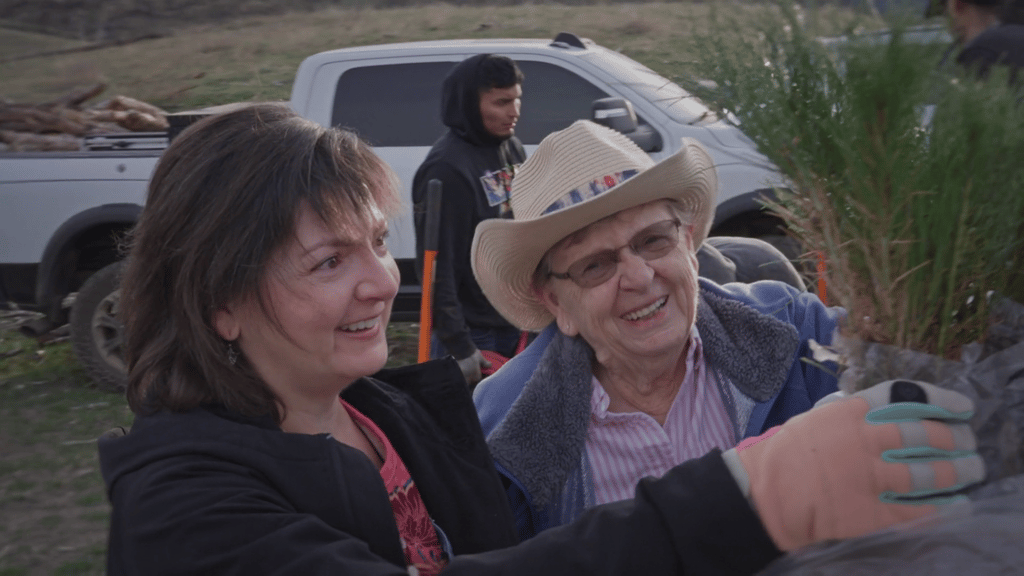 Landowners Rebecca and Velma Gentry holding some of their new seedlings during the April 2026 restoration event.