

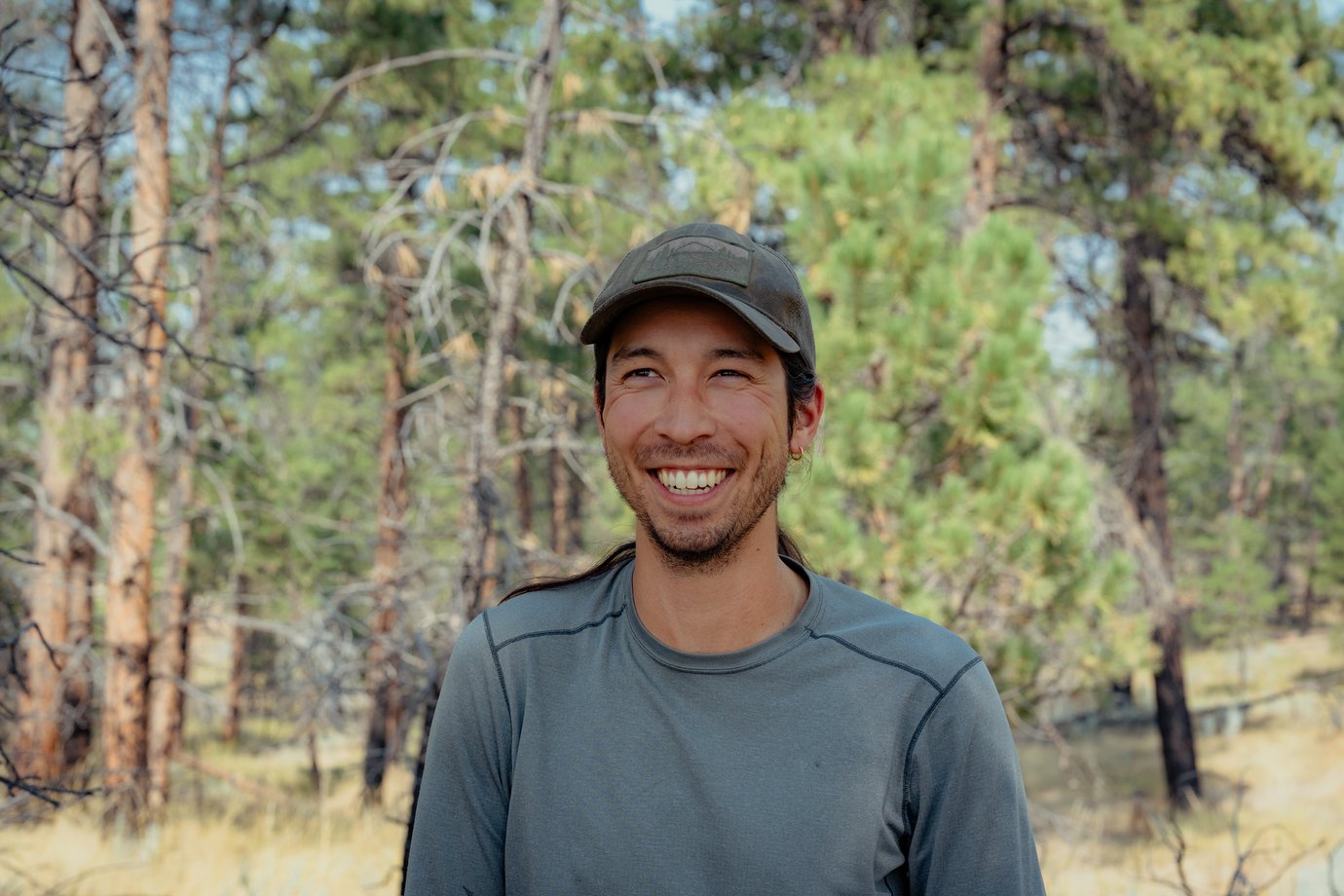
The wind picked up without warning.
Julian and his crew were deep in the burn scar at Sheep Creek, collecting vegetation data when the first snag cracked somewhere uphill. Then another.
Fire-killed trees—dead for years but still standing—began to fall as the wind intensified. Then the crew realized what was happening. Julian remembers the moment clearly:
When the wind hits those burned stands, it can bring snags down all around you. We had to run for the truck when the snags started falling.
The team grabbed their gear and ran for the truck, cutting their way back through tangled debris to get out of the woods safely.
For Julian, moments like that aren’t unusual. They’re part of the reality of working in post-wildfire landscapes—where restoration happens on steep slopes, in unpredictable weather, and across terrain still settling after fire.
It’s also a reminder that reforestation isn’t plug-and-play. Every burned landscape is different, and restoring it requires careful planning, local knowledge, and people willing to work in places most never see.
"I've never seen Julian run," says his colleague Tyler, "but if you stop for a moment he will be a mile ahead of you." That's the energy he brings to Mast.
As Senior Specialist, Forestry Operations, Julian works at the center of Mast’s reforestation engine—designing restoration plans, coordinating planting crews, scouting seed sources, and helping landowners turn burned acreage into future forests.
But his story starts long before Mast.
A Backyard in the Woods
Julian grew up outside Redmond, Washington, on a few wooded acres at the edge of town.
There were no fences. No crowded trails. Just forest.
I loved going out in the woods, you know, growing up, just having it be in my backyard there.
What started as childhood exploration—bushwhacking, building makeshift zip lines, learning the terrain—eventually became something more intentional. After briefly considering engineering in college, Julian realized he belonged somewhere else.
I knew I liked the woods...and it ended up being a really good choice.
Forestry gave him a language for something he’d always felt—and a way to turn that instinct into something meaningful.
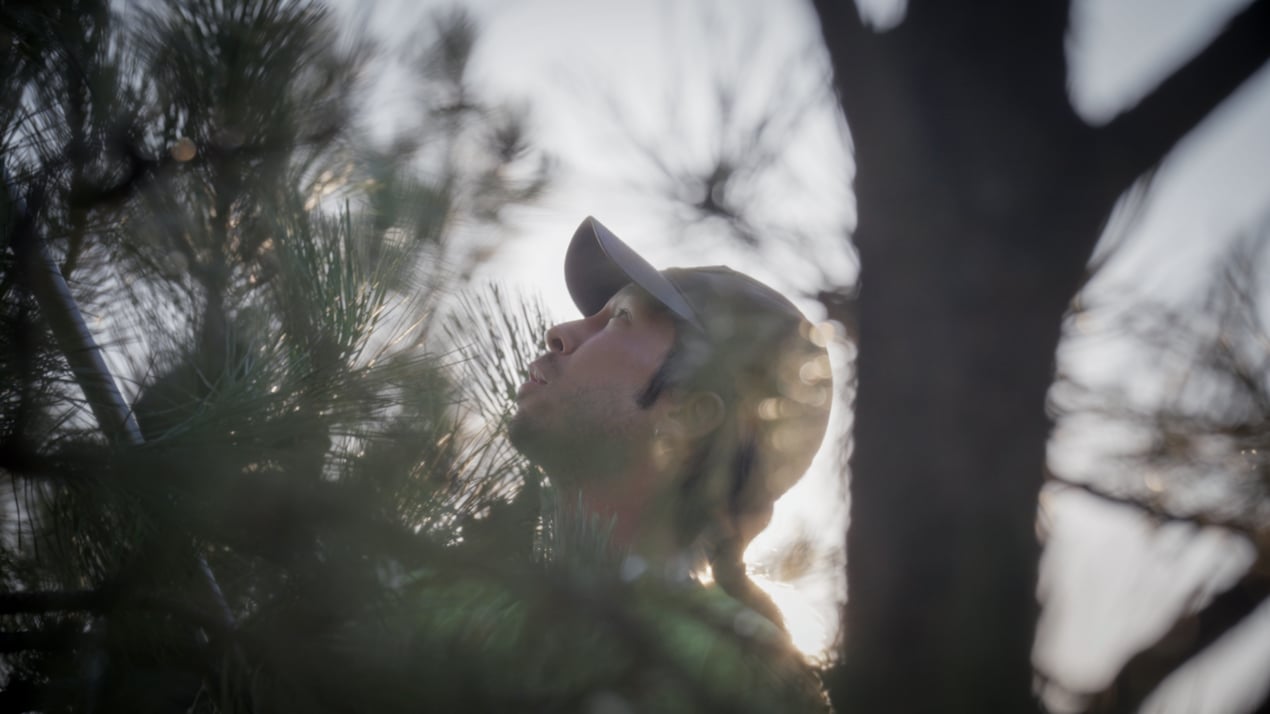
Julian collecting cones in eastern Montana in September 2025.
From Flagging Sales to Planting Trees
Before Mast, much of Julian’s work focused on preparing timber sales, cruising stands, laying out units, and marking harvest areas. Over time, something shifted.
I was tired of cutting down trees… I wanted to put trees in the ground.
His move from extraction toward restoration is what drew him deeper into reforestation work.
At Mast, he has helped design and execute planting projects across the West, including seasons where crews planted nearly three-quarters of a million trees.
Much of that work happens alongside planting crews, many of whom are Spanish-speaking. Julian speaks enough Spanish to act as a translator in the field, relaying instructions on planting technique, answering questions, making sure the plan on paper holds together once boots are on the ground.
From writing prescriptions based on species composition, site index, and stand density to coordinating refrigerated seedling storage and contractor crews, Julian works at the intersection of ecology and execution—fueled by whatever looked good at the last gas station and a single cup of coffee he'll nurse until it's long gone cold.
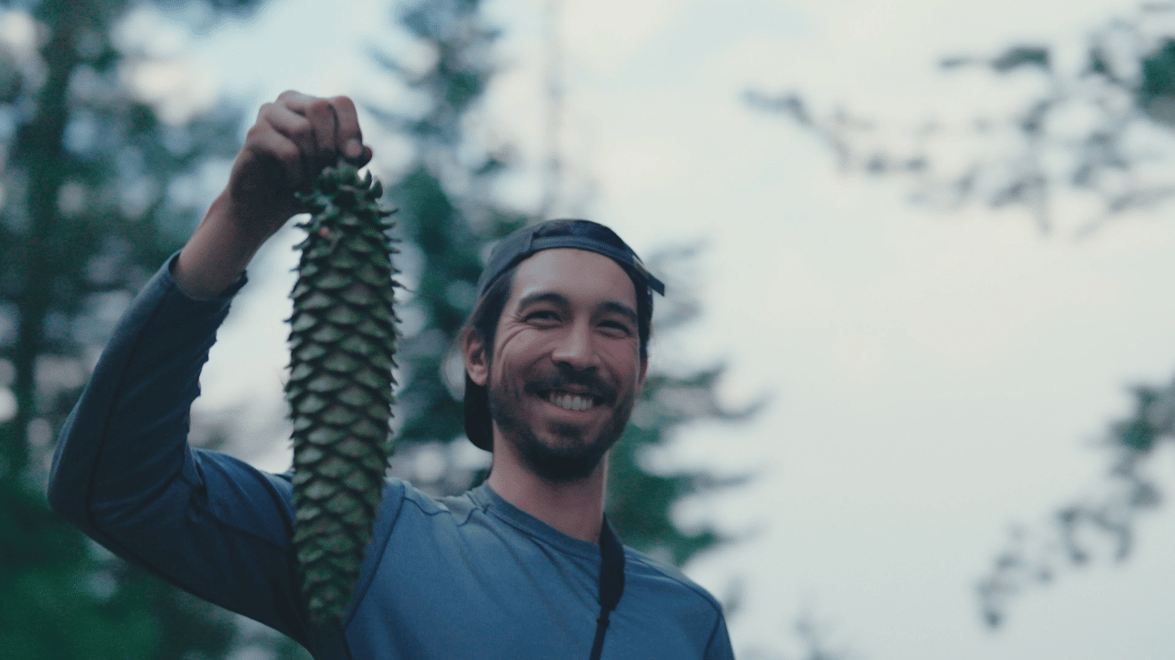
Julian holding a sugar pine cone during cone collections in California in 2023 .
Reforestation Is About People
For Julian, the impact of reforestation goes beyond ecology. It’s also about supporting the people and communities rebuilding after wildfire.
One of his most meaningful projects involved working on the Colville Reservation, coordinating planting crews and supporting tribal employment.
Being able to pump some money into that economy on the reservation felt really good.
At Mast, reforestation means working closely with landowners, contractors, and local crews, building trust while restoring the forests those communities depend on.
That mindset matters. Because restoration doesn't scale unless the people doing the work want to keep doing it.
Turning Wildfire Debris Into Future Forests
Today, Julian’s work extends beyond traditional planting. On Mast’s biomass burial projects like MT1 in Montana, he supports everything from initial site assessment and data collection to on-site logistics and reforestation planning.
By burying fire-killed trees and generating carbon credit revenue, Mast can fund reforestation immediately, rather than waiting a decade or more for forest growth credits to accrue. For MT1 landowners Velma and Rebecca Gentry, that means moving from loss to restoration in their lifetimes.
Julian has seen firsthand how receptive landowners can be to this new model.
They’re like, hell yeah, when can we start?
That enthusiasm gives him hope.
Across Montana, Wyoming, Oregon, and beyond, he’s seeing more foresters and landowners open to new approaches—especially when those approaches offer a path to restore land that once felt like a total loss.
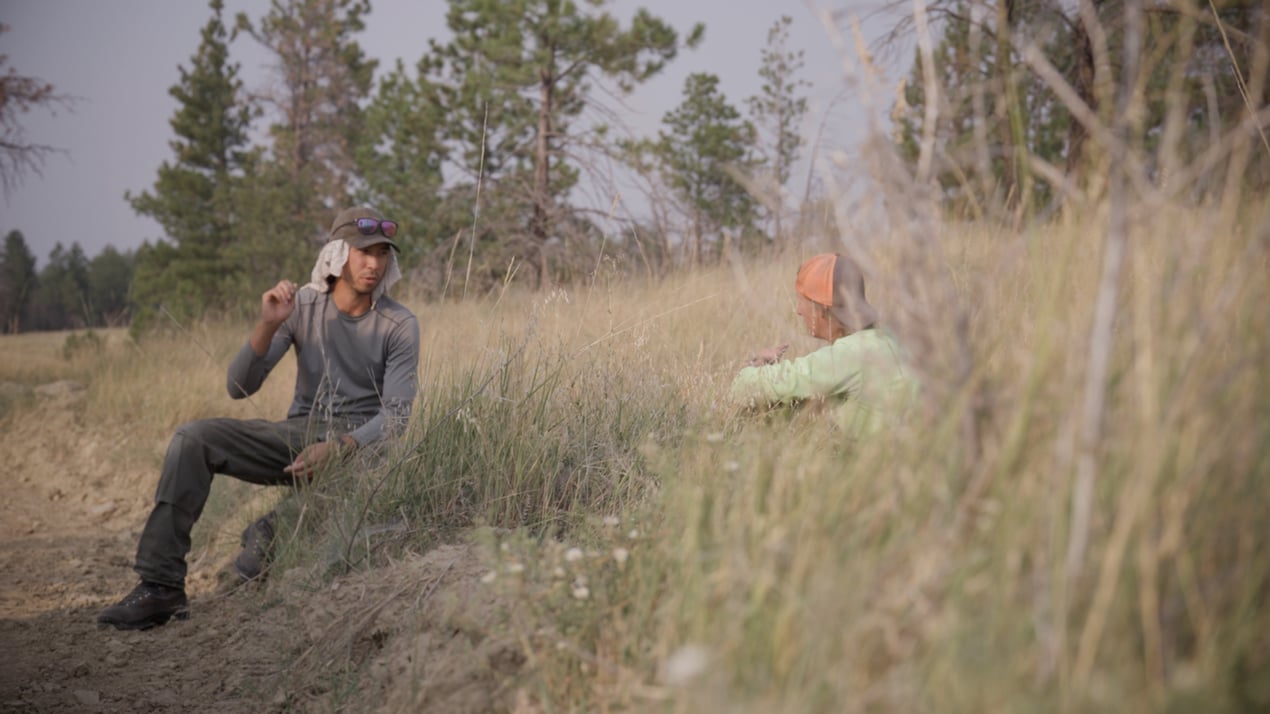 Julian speaks to Jessica Braun of Firebreak Management during cone collections in eastern Montana, September 2025.
Full Circle
Reforestation happens on uneven ground. In burned stands. In reefer trucks at 4 a.m. In conversations with landowners who just want their forest back. Sometimes it means racing down a mountain in a lightning storm trying to outrun the weather.
For Julian, this work has come full circle.
He once explored forests because they were there.
Now he helps them grow back so more kids can do the same.